

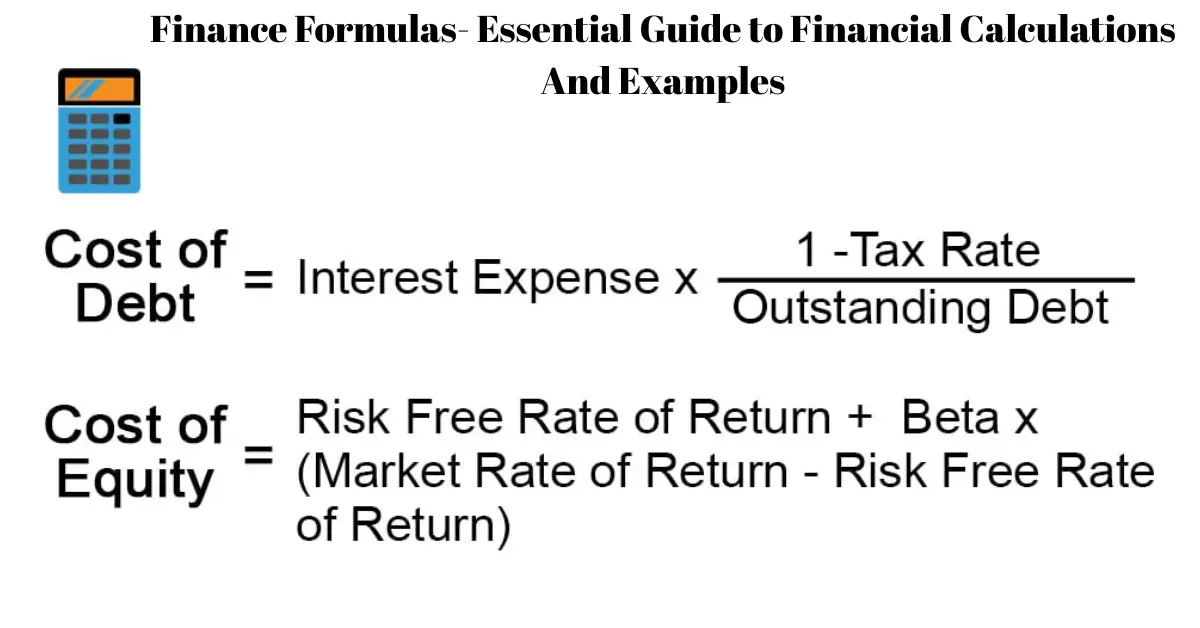
In the world of business, investing, and personal finance, making informed decisions often comes down to numbers. This is where finance formulas become indispensable. Whether you are calculating profits, evaluating investment returns, or managing your personal budget, understanding and applying these formulas can save time, reduce errors, and improve financial outcomes.
Finance formulas serve as the backbone of accurate financial analysis. From simple basic finance formulas like calculating interest or profit margins to more complex financial formulas used in investment analysis, mastering these calculations is essential for anyone who wants to make smarter money decisions.
In this article, you will discover the most important finance formulas, how to use them in practical scenarios, and tips for effective finance calculation. By the end, you’ll be equipped to apply these formulas confidently in real-life situations, whether for business planning, personal budgeting, or investment strategies. Understanding these tools not only enhances financial literacy but also empowers you to make decisions with precision and confidence.
What Are Finance Formulas?

At their core, finance formulas are mathematical expressions used to solve financial problems and analyze monetary data. They allow individuals and businesses to quantify important financial metrics, from profits and losses to investment returns and loan payments. Without these formulas, making informed financial decisions would be largely based on guesswork.
Financial formulas cover a wide range of applications. For example, they can help a business determine profit margins, track expenses, or calculate the break-even point. In investing, they are used to evaluate returns, estimate the future value of assets, and measure risk. Even in personal finance, simple formulas like interest calculations, savings growth, or budgeting ratios are vital tools for effective money management.
Understanding basic finance formulas is the first step toward financial literacy. Once you are familiar with these foundational calculations, you can tackle more advanced finance calculations with confidence. Learning to use these formulas not only improves accuracy but also saves time and reduces the likelihood of costly mistakes.
In the following sections, we will explore the different types of finance formulas, provide practical examples, and share tips for using them effectively in real-life financial scenarios. By the end, you’ll see just how essential finance formulas are for making smart, informed financial decisions.
Types of Finance Formulas

Finance is a broad field, and different formulas serve different purposes. Understanding the types of finance formulas is essential for applying them effectively in business, investing, or personal finance. Let’s break down the key categories.
Profit and Loss Formulas
Profit and loss formulas help businesses and individuals measure performance and profitability. Common basic finance formulas in this category include:
- Gross Profit = Revenue – Cost of Goods Sold (COGS)
- Net Profit = Revenue – Total Expenses
- Profit Margin = (Net Profit ÷ Revenue) × 100
These formulas are essential for analyzing business performance, identifying cost-saving opportunities, and making pricing decisions.
Investment Formulas
Investment formulas help evaluate the return and growth of assets. Key financial formulas include:
- Return on Investment (ROI) = (Gain from Investment – Cost of Investment) ÷ Cost of Investment × 100
- Compound Interest = Principal × (1 + Rate)^Time
- CAGR (Compound Annual Growth Rate) = (Ending Value ÷ Beginning Value)^(1 ÷ Years) – 1
These formulas allow investors to compare options, project growth, and plan long-term financial strategies.
Loan and Debt Formulas
Loans and debt require careful calculation to manage payments and interest. Important finance calculations include:
- EMI (Equated Monthly Installment) = [P × R × (1 + R)^N] ÷ [(1 + R)^N – 1]
- Interest = Principal × Rate × Time
Understanding these formulas ensures accurate budgeting and prevents overborrowing or missed payments.
Other Important Formulas
Other finance formulas include liquidity ratios, break-even analysis, and ROI for business projects. These calculations provide a broader view of financial health and help make informed decisions in complex scenarios.
By mastering these types of finance formulas, you can handle everything from day-to-day finance calculation to advanced financial planning.
Tips for Using Finance Formulas Effectively
Mastering finance formulas is one thing, but using them effectively is what makes a real difference in financial decision-making. Here are some practical tips to ensure accurate finance calculation and better results:
Start with Basic Finance Formulas
Before tackling advanced calculations, ensure you have a strong understanding of basic finance formulas such as profit, interest, and ROI. These foundational formulas form the building blocks for more complex financial analysis.
Use Tools and Software
Spreadsheets like Microsoft Excel or Google Sheets can automate calculations and reduce human error. Financial calculators and specialized software can also help with investment, loan, and budgeting formulas, making finance calculation faster and more accurate.
Double-Check Your Inputs
Even the most accurate formula will produce wrong results if inputs are incorrect. Always verify revenue, costs, rates, and time periods before performing calculations.
Apply Formulas in Real-Life Scenarios
Practice using formulas for your own investments, personal budget, or business planning. Real-world application reinforces understanding and highlights how financial formulas impact decisions.
Keep Learning and Updating
Finance is dynamic. New formulas, regulations, and tools emerge regularly. Stay updated to ensure your finance calculation methods remain relevant and effective.
By following these tips, you can use finance formulas confidently and make smarter financial decisions, whether for personal budgeting, business management, or investing.
Conclusion
Finance formulas are essential tools for anyone looking to make informed financial decisions. From calculating profits and investment returns to managing loans and personal budgets, these formulas simplify complex financial problems and improve accuracy. By mastering basic finance formulas and understanding advanced financial formulas, you can confidently perform finance calculations that guide smarter business, investment, and personal decisions.
Applying these formulas in real-life scenarios not only enhances financial literacy but also empowers you to plan effectively, minimize risks, and maximize returns. Whether you are a beginner or an experienced professional, practicing these formulas regularly ensures you stay precise and proactive in managing your finances. Start using these tools today and make your financial decisions more data-driven and reliable.
